
How to Get SIRA Approval in Dubai: Step-by-Step Process
Businesses in Dubai are increasingly adopting advanced surveillance, access control, and integrated security systems to enhance safety and meet regulatory requirements. However, installing these systems is only one part of the process; eligible businesses must obtain SIRA Approval to ensure compliance with local regulations. Whether setting up a new office, retail store, warehouse, or hotel, or upgrading an existing security system, understanding the SIRA approval process helps avoid project delays, additional costs, and compliance issues.
Why Planning Before Installation Is Critical
One of the most common reasons projects experience approval delays is that compliance is considered only after installation begins. A more effective approach is to incorporate SIRA requirements during the planning phase.
This allows businesses to:
Reduce redesign costs
Avoid installation delays
Improve inspection readiness
Select compliant equipment
Plan network infrastructure correctly
Prepare documentation early
Design systems that support future expansion
Early planning also makes it easier to integrate CCTV, access control, visitor management, and other security technologies into a single, scalable platform.
Step-by-Step Process to Get SIRA Approval in Dubai
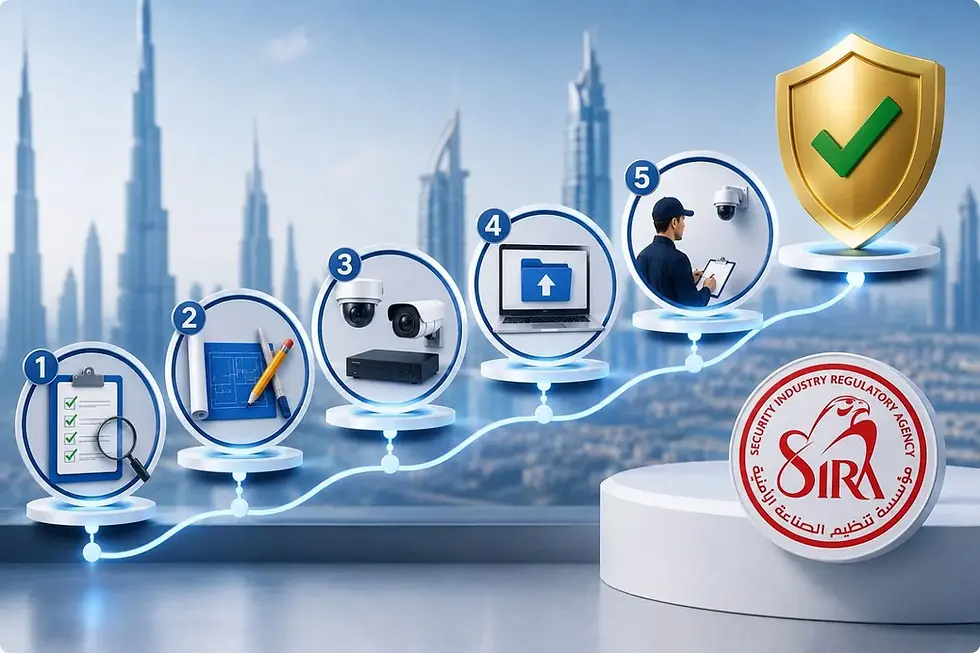
Although project requirements vary, most commercial security projects follow a structured approval workflow.
Step 1: Assess Your Security Requirements
The first step is understanding your facility's operational and security needs.
A professional site assessment helps identify:
Building entry and exit points
High-risk operational areas
Visitor movement
Vehicle access
Parking facilities
Restricted zones
Storage areas
Critical infrastructure
Rather than installing cameras everywhere, the objective is to create a security strategy based on actual operational risks.
Step 2: Work with a SIRA-Compliant Security Integrator
The success of any approval process depends heavily on the expertise of your security integration partner.
A qualified integrator helps businesses:
Understand applicable requirements
Recommend compliant technologies
Design integrated security systems
Prepare technical documentation
Coordinate installation
Conduct system testing
Support inspection readiness
Choosing an experienced partner at the beginning significantly reduces project risks and helps streamline the approval process.
Step 3: Develop a Compliant Security System Design
After the site assessment, a detailed security design is prepared.
This typically includes:
Camera placement layouts
Access control locations
Equipment specifications
Network architecture
Recording infrastructure
Cable routing
Power backup planning
Integration requirements
A well-designed system improves coverage, operational efficiency, and long-term scalability while supporting regulatory compliance.
Step 4: Select Approved Equipment
Using reliable, compliant security equipment is essential for successful project implementation.
Businesses should ensure the selected solution includes appropriate:
Surveillance cameras
Network video recorders
Storage systems
Access control devices
Power backup equipment
Network switches
Monitoring software
Selecting suitable technologies at the beginning reduces future upgrade costs and supports long-term system reliability.
Step 5: Prepare the Required Documentation
Accurate documentation plays a crucial role in the SIRA Approval in Dubai process. Incomplete or incorrect submissions can delay project approvals and inspections.
Depending on the project type, businesses should prepare documents such as:
Security system layout drawings
Equipment specifications
Device location plans
Network architecture diagrams
Cable routing plans
Bill of quantities (BOQ)
System design documentation
Site information and project details
Testing and commissioning reports (where applicable)
Maintaining organized documentation throughout the project also simplifies future maintenance, upgrades, and compliance reviews.
Step 6: Install the Security System According to Approved Standards
Once the system design is finalized and the required documentation is prepared, the installation phase begins. Installation should follow approved technical standards and industry best practices to ensure the system performs reliably and is ready for inspection.
This includes:
Proper positioning of CCTV cameras
Installation of access control devices
Structured cabling and network setup
Reliable power backup configuration
Secure equipment mounting
Integration of connected security systems
Initial software configuration
A professionally installed system minimizes operational issues and helps avoid costly rework later in the project.
Step 7: Conduct System Testing and Commissioning
Before requesting an inspection, the entire security system should be thoroughly tested to verify that every component functions as intended.
The commissioning process typically includes:
Camera image quality verification
Recording and playback testing
Storage capacity verification
Network connectivity checks
Access control functionality
Alarm and notification testing
Power backup testing
Integration between connected systems
Performing these checks before inspection helps identify and resolve potential issues early, improving the likelihood of a smooth approval process.
Step 8: Inspection and Compliance Verification
After installation and testing are complete, the project proceeds to the inspection stage.
During the inspection, the installed security system is reviewed to verify that it aligns with the approved design and applicable technical requirements.
Inspectors typically evaluate:
Camera coverage
Equipment installation quality
System functionality
Recording performance
Network reliability
Documentation accuracy
Integration of security systems
Overall operational readiness
Facilities that are properly planned and tested generally experience a faster and more efficient inspection process.
Step 9: Address Observations (If Required)
If any issues are identified during the inspection, they should be corrected promptly before requesting a follow-up review.
Common observations may include:
Camera positioning adjustments
Coverage improvements
Documentation updates
Equipment configuration corrections
Network optimization
Minor installation modifications
Resolving observations efficiently helps keep projects on schedule and ensures compliance with applicable standards.
Step 10: Maintain Compliance After Approval
Obtaining SIRA Approval in Dubai is not the final step. Security systems should continue to operate reliably throughout their lifecycle.
Businesses should establish a preventive maintenance program that includes:
Routine equipment inspections
Camera cleaning
Storage health monitoring
Firmware and software updates
Network performance checks
Power backup testing
System health reports
Regular maintenance supports long-term performance and helps ensure the system remains ready for future inspections or upgrades.
Common Challenges During the SIRA Approval Process
Although the approval process is well structured, several common issues can delay project completion.
Inadequate Planning: Beginning installation without a detailed security design often results in redesigns, additional costs, and extended project timelines.
Choosing Non-Compliant Equipment: Selecting equipment without considering compliance requirements may require replacements or modifications during the project. Working with experienced security professionals helps avoid compatibility and compliance issues.
Poor Documentation: Missing or incomplete documentation remains one of the most common reasons for project delays. Maintaining accurate records throughout the project simplifies approvals and future maintenance.
Lack of System Integration: Installing security technologies as independent systems rather than an integrated solution can reduce operational efficiency and complicate management. Integrated platforms provide centralized monitoring and better overall performance.
Delaying Preventive Maintenance: Ignoring routine maintenance can affect camera performance, recording quality, network stability, and overall system reliability. Preventive servicing helps extend equipment lifespan and maintain consistent performance.

Best Practices for Faster SIRA Approval
Businesses can improve project efficiency by following a few practical recommendations:
Plan security requirements during the design phase.
Conduct a detailed site survey before installation.
Select high-quality, compliant security equipment.
Keep all project documentation organized.
Test every system before requesting inspection.
Design infrastructure with future expansion in mind.
Schedule regular preventive maintenance after project completion.
These best practices help reduce approval delays while supporting long-term operational reliability.
How Integrated Security Systems Simplify Compliance
Modern commercial facilities increasingly benefit from integrated security platforms instead of standalone solutions.
A unified security infrastructure can combine:
CCTV surveillance
Access control
Video intercom
Visitor management
ANPR
Intrusion detection
Central monitoring software
Integration provides several advantages:
Centralized monitoring
Faster incident response
Simplified security management
Improved operational visibility
Easier maintenance
Better scalability for future expansion
As businesses continue adopting smart building technologies, integrated security systems are becoming the preferred approach for both operational efficiency and regulatory compliance.
Conclusion
Obtaining SIRA Approval in Dubai is a structured process that requires careful planning, compliant system design, accurate documentation, professional installation, and ongoing maintenance. By understanding each stage of the approval process and following industry best practices, businesses can minimize delays, avoid costly modifications, and ensure their security systems meet Dubai's regulatory standards. Partnering with an experienced security integrator like KeenTeQ further simplifies the process by providing end-to-end support, helping businesses implement reliable, scalable, and SIRA-compliant security solutions that are built for long-term success.
If you are planning a new security installation or need assistance with an existing system, contact KeenTeQ today to get expert guidance on achieving SIRA compliance with confidence.
FAQ
What documents are required for SIRA approval?
How can businesses speed up the SIRA approval process?
Businesses can speed up the approval process by planning early, selecting compliant equipment, maintaining complete documentation, conducting thorough system testing, and working with an experienced SIRA-compliant security integrator.
Why is preventive maintenance important after receiving SIRA approval?
Regular preventive maintenance helps ensure security systems continue to operate efficiently, minimizes unexpected failures, extends equipment lifespan, and supports long-term compliance with operational standards.
Why choose KeenTeQ for SIRA-compliant security solutions?
KeenTeQ provides complete SIRA-compliant CCTV, access control, ELV, and integrated security solutions, including consultation, system design, installation, documentation, approval assistance, and ongoing maintenance, helping businesses achieve seamless compliance and long-term security performance across the UAE.
How long does the SIRA approval process take?
The approval timeline depends on factors such as project size, documentation accuracy, installation quality, and inspection scheduling. Proper planning and complete documentation can help reduce approval delays.


