
The Future of CCTV: AI-Powered Surveillance Systems
CCTV has evolved from traditional video recording into advanced AI-Powered Surveillance Systems that can analyze activities, identify people, vehicles, and objects, and deliver real-time security alerts. The growing demand for proactive security across the UAE has increased the adoption of AI surveillance in commercial, retail, industrial, residential, and public spaces. By combining artificial intelligence, machine learning, deep learning, and video analytics, ai powered cctv helps organizations detect potential risks, reduce reliance on passive monitoring, and improve security response.
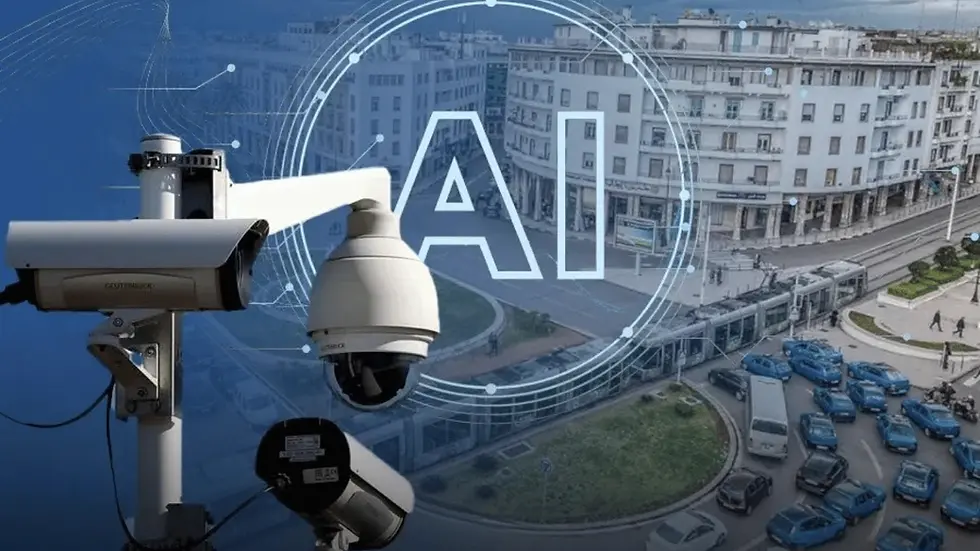
What Are AI-Powered Surveillance Systems?
AI-Powered Surveillance Systems are CCTV solutions that use artificial intelligence and video analytics to automatically analyze video footage. Unlike conventional CCTV, which primarily captures and stores footage, AI-enabled systems can interpret visual information, recognize objects and people, identify predefined activities, and detect unusual events.
Several technologies work together to provide these capabilities:
Artificial Intelligence (AI): Analyzes visual information and identifies specific events or security risks.
Machine Learning (ML): Helps systems recognize patterns and classify different activities.
Deep Learning: Uses neural networks to improve the recognition of people, vehicles, objects, and complex activities.
Video Analytics: Converts CCTV footage into actionable information for monitoring and security decision-making.
Modern ai powered cctv can support real-time monitoring, automated threat detection, intrusion detection, behaviour analysis, crowd monitoring, vehicle recognition, and license plate recognition. Intelligent alerts can highlight important events, allowing security personnel to focus on incidents that require immediate attention rather than continuously monitoring multiple screens.
How AI Is Transforming Traditional CCTV Systems
The biggest change brought by AI is the shift from simply recording activity to actively analyzing it.

Key Features of AI-Powered Surveillance Systems
1. Facial Recognition Technology
Facial recognition is one of the more advanced capabilities available in certain AI surveillance solutions. It can analyze facial characteristics and compare them with authorized profiles or predefined databases, depending on the system.
Potential applications include:
Access control integration
Restricted-area monitoring
Visitor management
Identity verification
Security investigations
For organizations considering facial recognition, privacy, data protection, and applicable legal requirements should be carefully evaluated before deployment.
2. Smart Motion Detection and Object Recognition
Conventional motion detection may generate an alert whenever movement occurs in a camera's field of view. This can result in unnecessary alarms caused by animals, shadows, weather, or other non-threatening activity.
AI-enabled cameras can use object classification to distinguish between different types of movement, including:
People
Vehicles
Animals
Other moving objects
This can help businesses:
Reduce false alarms
Improve monitoring accuracy
Prioritize relevant events
Support faster security responses
Improve overall surveillance efficiency
For example, an AI camera installed around an industrial facility can be configured to focus on human movement within a restricted zone rather than triggering an alert for every moving object.
3. Real-Time Threat Detection and Smart Alerts
A major advantage of ai video surveillance is its ability to analyze live footage and identify predefined security events.
Depending on the camera and software, AI systems can detect activities such as:
Unauthorized entry
Intrusion attempts
Loitering
Unusual movement
Perimeter breaches
Entry into restricted zones
Abandoned objects
When a relevant event occurs, the system can generate an alert for security personnel.
This can help businesses reduce response times and take action before a potential security issue develops into a more serious incident.
4. Behaviour Analysis and Predictive Security
AI-powered video analytics can analyze movement patterns and identify activities that differ from predefined expectations.
Possible applications include:
Crowd monitoring
Unusual movement detection
Aggressive behaviour detection where supported
Safety risk identification
Abnormal activity monitoring
For example, if an unusual crowd begins forming near a restricted entrance, video analytics can alert security personnel so that the situation can be assessed.
Predictive security is also becoming an important area of development. By analyzing patterns and historical information, future AI systems may help organizations identify potential risks earlier and support proactive security decisions.
5. License Plate Recognition
License Plate Recognition (LPR) uses cameras and AI-based image processing to identify vehicle registration plates.
AI-enabled LPR can support:
Automatic number plate identification
Vehicle tracking
Parking management
Authorized vehicle access
Restricted vehicle detection
Entry and exit monitoring
These systems can be useful in:
Commercial buildings
Airports
Residential communities
Industrial facilities
Parking facilities
Large business campuses
When integrated with access control, LPR can help automate vehicle entry and provide greater visibility over vehicle movements.
Benefits of AI-Powered CCTV Systems for Businesses
Enhanced Security and Faster Response
AI can analyze surveillance footage continuously and identify predefined security events in real time. When an event is detected, security personnel can receive an alert and investigate it quickly. This proactive approach can improve situational awareness and support faster response to potential security risks.
Reduced False Alarms
False alarms can place unnecessary pressure on security teams. Smart CCTV systems can use AI-based object and activity classification to distinguish relevant events from many types of non-threatening movement. This helps security personnel focus on alerts that require attention.
24/7 Intelligent Monitoring
Large facilities may have numerous cameras covering entrances, parking areas, corridors, perimeters, and restricted zones. AI can continuously analyze these feeds, providing an additional layer of intelligent security without relying entirely on personnel to watch every screen at all times.
Improved Operational Efficiency
AI video analytics can provide insights beyond conventional security monitoring.
Depending on the system, businesses can analyze:
Customer movement
Crowd patterns
Workplace safety
Occupancy trends
Traffic flow
Operational activities
These insights can help organizations improve both security and day-to-day operations.
Remote Monitoring and Management
Modern CCTV systems can support remote access through compatible applications, software, and cloud platforms.
Authorized users may be able to:
View live camera feeds
Review recorded footage
Receive security alerts
Monitor multiple locations
Manage selected surveillance functions remotely
This is particularly useful for businesses with multiple facilities or security teams that need centralized visibility.

Future Trends in AI CCTV Technology
1. Cloud-Based AI Surveillance
Cloud technology is changing how organizations manage CCTV infrastructure.
Cloud-enabled surveillance solutions can provide:
Remote access
Centralized management
Multi-site monitoring
Scalable infrastructure
Centralized event management
For businesses operating across multiple locations, centralized management can simplify surveillance operations and improve visibility.
2. Edge AI Processing
Edge AI involves processing video data closer to the camera instead of sending all information to a remote server.
This approach can offer advantages such as:
Faster video analysis
Reduced network traffic
Lower bandwidth requirements
Faster event detection
Greater control over data processing
Edge processing can be particularly useful where rapid analysis and efficient network usage are important.
3. Integration with IoT and Smart Security Systems
The future of surveillance will increasingly involve connected security technologies.
Intelligent surveillance systems can be integrated with:
Smart access control
Alarm systems
Building management systems
Smart sensors
Visitor management platforms
Security management software
For example, an AI camera may identify an event and trigger an integrated alarm or access-control response, depending on the system configuration.
This creates a more connected and automated security environment.
4. Advanced Analytics and Predictive Intelligence
AI surveillance technology is expected to become more capable of understanding complex activities and identifying patterns.
Future developments may include:
Advanced behaviour recognition
Improved anomaly detection
Predictive security analytics
Automated event classification
More accurate threat detection
Advanced operational insights
As AI technology develops, surveillance systems will increasingly serve as decision-support tools rather than simply recording devices.
Why Businesses in the UAE Are Moving Towards AI-Based CCTV Solutions
Businesses in the UAE are shifting from traditional CCTV to AI surveillance systems that enable proactive monitoring, real-time analysis, and faster security response. This change is driven by digital transformation and the growing need for smarter, more efficient security solutions.
Key factors driving this demand include:
Faster security response requirements
Adoption of smart technologies
Large commercial and industrial facilities
Connected security systems
Digital transformation initiatives
Improved monitoring efficiency
This trend is also visible in Dubai’s security advancements. In 2026, Dubai Police launched a pilot Digital Twin System with 150 cameras to enable real-time monitoring, data analysis, and smarter decision-making, showing how AI is strengthening security infrastructure across the UAE.
AI surveillance is widely used in commercial buildings, hotels, airports, retail spaces, industrial zones, residential communities, and business campuses. For CCTV installation Dubai, businesses should choose providers with expertise in AI systems, integration, site assessment, and maintenance, focusing on tailored security design rather than just the number of cameras.
How KeenTeQ Delivers Advanced CCTV and AI Security Solutions in UAE
Selecting an AI surveillance system requires careful consideration of the property, security objectives, camera coverage, network infrastructure, storage requirements, integration needs, and future scalability.
KeenTeQ provides modern CCTV and security solutions designed around the requirements of businesses across the UAE.
Our services can include:
AI-enabled CCTV camera installation
CCTV system consultation
Security system planning
Security technology integration
System configuration and testing
CCTV maintenance and technical support
For businesses searching for cctv installation dubai, UAE KeenTeQ can help assess surveillance requirements and identify suitable technologies for different environments.
The objective is not simply to install cameras but to develop a surveillance solution that provides useful security information, supports efficient monitoring, and can adapt to future requirements.
Conclusion
The future of CCTV is shifting from passive recording to proactive security with AI-Powered Surveillance Systems. These systems analyze video, detect objects and events, recognize faces and license plates, assess behaviour, and provide real-time alerts. Technologies such as edge AI, cloud surveillance, and IoT integration help UAE businesses respond faster, reduce false alarms, enable remote monitoring, and improve visibility.
While facial recognition gets the most attention, our experience with AI CCTV deployments across the UAE shows that smart motion detection and behaviour analytics often deliver the biggest day-to-day benefits. By filtering routine movement such as shadows, weather changes, and authorized activity, these technologies reduce false alarms and help security teams focus on genuine incidents.
As these technologies evolve, AI-powered CCTV systems are becoming essential to modern security infrastructure. KeenTeQ provides end-to-end AI-powered CCTV solutions across the UAE, from consultation and installation to integration and support. Contact KeenTeQ to choose the right surveillance solution for your business.
FAQ
What is an AI-powered surveillance system?
An AI-Powered Surveillance System is a CCTV solution that uses artificial intelligence, machine learning, and video analytics to analyze video footage. Unlike traditional CCTV, it can identify objects, detect predefined activities, and generate alerts automatically.
How does AI-powered CCTV work?
AI-powered CCTV uses cameras, AI algorithms, and video analytics to analyze live footage. The system can recognize objects such as people and vehicles and identify specific activities or events based on its configuration.
Can AI-powered CCTV systems work with existing cameras?
In some cases, AI video analytics can be integrated with existing CCTV infrastructure. Compatibility depends on the camera capabilities, video management system, network setup, and AI software being used. A professional assessment can help determine whether an existing system can be upgraded.
What is license plate recognition in CCTV?
License Plate Recognition (LPR) is an AI-based technology that detects and reads vehicle registration plates. It can support vehicle monitoring, parking management, access control, and restricted vehicle detection.
How much does an AI CCTV installation cost in Dubai?
The cost of CCTV installation in Dubai varies depending on factors such as the number and type of cameras, AI features, storage requirements, site size, cabling, integration, installation complexity, and maintenance requirements. A site assessment is generally the best way to determine the appropriate solution and cost.


